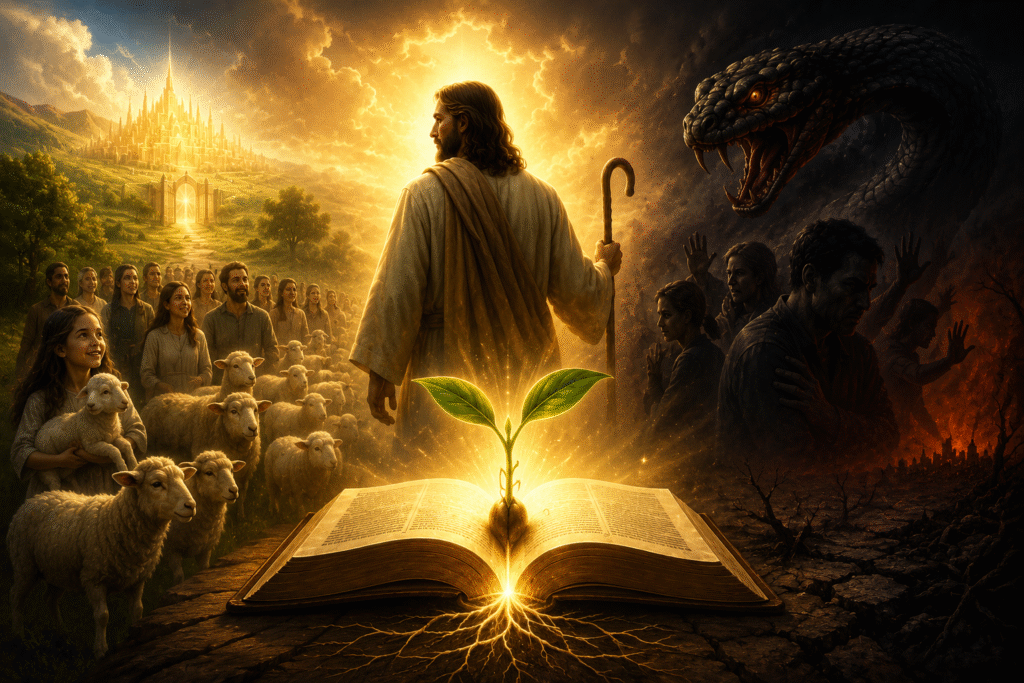
Romans 9:8 “That is, they which are the children of the flesh, these are not the children of God: but the children of the promise are counted for the SEED.”
There are two kinds of people in this world: those who are the children of God and those who are not. The former are the ones whom the Lord Jesus Christ came to save. They have the capacity to be born-again, to be sanctified, and ultimately, to be glorified. The latter, however, regardless of the effort they may exert, cannot attain these blessings.
According to the verse above, a person can only be counted as a child of God if he/she belongs to the “children of the promise,” who are counted as the Seed. Therefore, the distinguishing factor among all people is whether they possess the Seed of God or not.
This leads us to the most important question a person can ask:
Am I a Seed of God?
Before we can answer that question, we must first understand what the Bible means by the term “Seed of God.”
WHAT IS A SEED OF GOD?
Luke 8:11 “Now the parable is this: The seed is the WORD of God.”
In Luke 8:5–8, the Lord Jesus Christ told His disciples the Parable of the Sower. Then, in verses 10–15, He revealed to them the meaning of the parable.
The first thing He explained was the Seed. According to the Lord Himself, the Seed in the parable is none other than the WORD OF GOD. The answer is clear and straightforward: THE SEED IS THE WORD.
Therefore, anyone who is born with the Word of God in him or her is a Seed of God. Conversely, those who are born without the Word of God in them are not a Seed of God.
With this thought in mind, the Lord Jesus further explained the Seed of God in another parable—the Parable of the Wheat and the Tares (Matthew 13:24–43). According to Him:
Matthew 13:38 “The field is the world; the good seed are the children of the kingdom; but the tares are the children of the wicked one.”
In this verse, the Lord emphasized that the good seed, or the Seed of God, are the children of the Kingdom. This supports the statement of the Apostle Paul in Romans 9:8, which says, “but the children of the promise are counted for the SEED.”
From these passages, we can conclude that those who are born with the Word of God—the Seed—in them are called the Seed of God or the children of the Kingdom.
So what makes a person a Seed of God? It is the presence of the WORD OF GOD within that person. The Seed is the Word, and those who possess that Seed are called the Seed of God.
THE SEED IS THE TRUTH
Now, remember that this Seed of God, which is the Word of God, is also the TRUTH.
John 17:17 “Sanctify them through thy truth: thy word is truth.”
Since the Seed is the Word, and the Word is Truth, it follows that the Seed of God in a person is the Truth dwelling within that person.
If not all people possess the Seed, then it also follows that not all people possess the Truth. Furthermore, this means that not everyone originated from the Truth. Only those who came from the Truth can be called the Seed of God, the children of the Kingdom, or the children of the Truth.
The Lord Jesus Himself taught this principle:
John 18:37 “Pilate therefore said unto him, Art thou a king then? Jesus answered, Thou sayest that I am a king. To this end was I born, and for this cause came I into the world, that I should bear witness unto the truth. EVERY ONE THAT IS OF THE TRUTH heareth my voice.”
Notice that the Lord did not say that everyone hears His voice. Instead, He specifically identified a certain group of people—those who are “of the Truth.” These are the ones who recognize His voice and respond to it.
Why do they hear His voice? Because the Truth is already within them. The same Truth that the Lord came to testify of is the very Seed that they possess. Thus, when the Truth speaks, those who are of the Truth recognize it, receive it, and believe it.
Therefore, the ability to hear and receive the voice of Christ is evidence that a person is of the Truth, possesses the Seed of God, and belongs to the children of the Kingdom.
Only those who are of the Truth—those who came from the Truth—can hear the voice of the Lord, for only they possess the Seed of God. It is this Seed, which is the Truth within them, that enables them to recognize, hear, and accept the Truth that comes from the Lord.
Viewed from the perspective of Truth, there are only two kinds of people in this world: those who came from the Truth and those who did not. This explains why there are people who, no matter what they do, cannot hear the voice of the Lord. They cannot receive the Truth because they do not possess the receiver of Truth within them—the Seed of God.
The Lord Jesus illustrated this principle in His teaching about the Shepherd and the sheep:
John 10:2-4 “But he that entereth in by the door is the shepherd of the sheep. To him the porter openeth; and the sheep hear his voice: and he calleth his own sheep by name, and leadeth them out. And when he putteth forth his own sheep, he goeth before them, and the sheep follow him: for they know his voice.”
Notice that the Lord’s sheep hear His voice and follow Him because they know His voice. The ability to recognize the Shepherd is not something learned externally; rather, it is internal, in the spirit.
The Lord further emphasized this truth:
John 10:27 “My sheep hear my voice, and I know them, and they follow me.”
The Lord did not say that all people hear His voice. He specifically said, “My sheep hear my voice.” His sheep are those who belong to Him, those who are of the Truth, and those who possess the Seed of God within them.
Because they carry the Seed of Truth, they can recognize the Truth when it speaks. When the voice of the Shepherd calls, the Seed within them responds. They hear His voice, receive His Word, and follow Him because His Truth bears witness with the Truth that is already in them.
Therefore, hearing and following the voice of Christ is the manifestation of the Seed of God within a person. It reveals that that individual is of the Truth, belongs to Christ’s sheep, and is counted among the children of the Kingdom.
However, there are also people who do not care for the Truth because they cannot hear it. In fact, they oppose it and even hate it because they did not came from it. As a result, they seek to destroy those who proclaim it. The Lord Jesus Himself said:
John 8:40 “But now ye seek to kill me, a man that hath told you the truth, which I have heard of God: this did not Abraham.”
The reason for their hostility was not merely a disagreement with the Lord Jesus; it was their inability to receive the Truth. The Lord further explained:
John 8:43-46 “Why do ye not understand my speech? even because ye cannot hear my word. Ye are of your father the devil, and the lusts of your father ye will do. He was a murderer from the beginning, and abode not in the truth, because there is no truth in him. When he speaketh a lie, he speaketh of his own: for he is a liar, and the father of it. And because I tell you the truth, ye believe me not. Which of you convinceth me of sin? And if I say the truth, why do ye not believe me?”
According to the Lord, they could not hear His Word because they were not of the Truth. They could not receive the Truth because there was no Truth in them to respond to it. They lacked the Seed that could recognize and receive the Truth.
Because they could not receive the Truth, they opposed it. And because they opposed it, they sought to destroy those who proclaimed it.
However, if you are a Seed of God, then you came from the Truth. If you came from the Truth, then you are part of the Truth. The Truth is in you, and it is that Truth within you that hears the Voice of the Lord and receives His Word.
The Truth within recognizes the Truth spoken by Christ. When the Shepherd speaks, His sheep hear His voice because there is something within them that bears witness to His Word.
Furthermore, if you are part of the Truth, then you can never be destroyed, because Truth itself cannot be destroyed. John 17:17 declares that the Truth is the Word of God:
“Sanctify them through thy truth: THY WORD IS TRUTH.”
Since Truth cannot be destroyed, those who are of the Truth cannot perish. The Truth remains eternal, and those who came from the Truth share in that eternal nature. Therefore, destruction has no power over the Seed of God, because the Seed is the Truth, and the Truth endures forever. This means that you can never go to Hell, because Hell will be useless for you, for even the fires of Hell cannot destroy you (Truth).
This is why not every person in the world is called a Seed of God. Not everyone came from the Truth. The Seed of God consists only of those who are of the Truth. Likewise, not everyone can hear the Voice of the Lord, because not everyone is His sheep. Only His sheep hear His voice, recognize it, and follow Him. For this reason, the Lord is the Shepherd of those who possess the Truth, because they alone can hear and respond to His Voice.
THE LORD JESUS DIED ONLY FOR THE SHEEP
It is also important to take note that the Lord Jesus Christ died only for His Seed (sheep), and not for those who are goats (not His seed) (Mat. 25:31-33). Therefore, according to this understanding, only those who are the Seed are the ones who are saved. The Lord Himself declared this:
John 10:11 “I am the good shepherd: THE GOOD SHEPHERD GIVETH HIS LIFE FOR THE SHEEP.”
And again:
John 10:15 “As the Father knoweth me, even so know I the Father: AND I LAY DOWN MY LIFE FOR THE SHEEP.”
These statements are direct and unmistakable. The Lord Jesus said that He laid down His life for the sheep. He identified Himself as the Good Shepherd who gives His life for His flock.
The sheep are those who hear His voice, follow Him, and belong to Him. They are the ones whom He knows, and they are the ones for whom He willingly offered His life with. For this reason, the salvation accomplished by Christ is inseparably connected to His sheep. His sacrifice was made on behalf of those who belong to Him—the Seed of God, or the children of the Kingdom, or those who are of the Truth.
This is why there are people in this world who are saved and people who are not. The saved are those who have a Shepherd, for the Shepherd laid down His life for them. They are the ones covered by His blood and redeemed by His sacrifice on the cross.
On the other hand, those who are not His sheep do not hear His voice, do not follow Him, and do not belong to His flock. Since the Good Shepherd gave His life for the sheep, they remain outside the salvation that belongs to His flock.
Therefore, the distinction between the saved and the unsaved is ultimately tied to whether a person belongs to the Shepherd. Those who are His sheep are saved because He gave His life for them. Those who are not His sheep (goats) remain outside of that saving work because they do not belong to His flock.
ESAU AND JACOB
One of the clearest examples of the Sheep and the Goat or the Saved and the Unsaved are Esau and Jacob. In Romans 9:11-13, both Esau and Jacob were still in their mother’s womb. They had not yet been born, nor had they done anything good or evil. Yet, one was already chosen according to God’s election, while the other was not.
Romans 9:11-13 “(For the children being not yet born, neither having done any good or evil, that the purpose of God according to election might stand, not of works, but of him that calleth) It was said unto her, The elder shall serve the younger. As it is written, Jacob have I loved, but Esau have I hated. What shall we say then? Is there unrighteousness with God? God forbid.”
These verses show that being a Seed of God is according to God’s election. A person is either born with the Seed or without it. It cannot be obtained through good works, religious efforts, or human merit. The Seed is not something that a person earns; it is something that is present already in a person.
Furthermore, being a Seed of God is not determined by bloodline or genetic inheritance. Remember that Esau and Jacob were twins (Genesis 25:24). They shared the same parents—Isaac and Rebekah—who were both Seed of God. If being a Seed of God were hereditary, then both Esau and Jacob should have been God’s Seed. But Esau is not.
This demonstrates that being a Seed of God is non-hereditary. It is not passed from parent to child through natural birth. Being a Seed of God has nothing to do with our biological makeup but has everything to do with our spirit.
Romans 9:8 “That is, They which are the children of the flesh, these are not the children of God: but the children of the promise are counted for the seed.”
The Seed of God is not found in the flesh but in the spirit. We can inherit the genetic traits of our parents (their physical attributes), but never their spirits. Our spirit came directly from God the moment that we are born in this world. We can read this in Hebrews 12:9:
“Furthermore we have had fathers of our flesh which corrected us, and we gave them reverence: shall we not much rather be in subjection unto the Father of spirits, and live?”
This verse tells us that we have fleshly fathers from whom we have inherited our flesh. But we also have a heavenly Father to Whom our spirits came. The Seed of God dwells in the spirit, not in the natural body. This is why the Seed cannot be inherited by the children becuase our spirits came directly from God. It is only the flesh of the parents that can be inherited by the children, not ther spirits.
Therefore, whether a person is a Seed of God or not, is not determined by physical descent, nationality, family background, or ancestry. It is determined by our spirit alone.
The Lord Jesus Christ called those who are not the seed of God as serpents and generation of vipers:
Matthew 23:33 “Ye serpents, ye generation of vipers, how can ye escape the damnation of hell?”
Matthew 12:34 “O generation of vipers, how can ye, being evil, speak good things? for out of the abundance of the heart the mouth speaketh.”
Why did the Lord call them serpents and a generation of vipers? It is because those who are not the Seed of God belong to another seed—the seed of the Serpent.
This distinction between the two seeds is not a new concept introduced in the New Testament. Rather, it can be traced back to the very beginning of the Bible, in the Book of Genesis, where the conflict between these two seeds was first revealed.
THE SEED OF GOD AND THE SEED OF THE SERPENT
In the beginning, there is only the Seed of God – Adam and Eve. But another seed was born after Eve was beguiled by the Serpent that she bore him a son named Cain (2 Cor. 11:2-3). Cain became the first seed of the Serpent. The Apostle John plainly identifies Cain’s origin:
1 John 3:12 “Not as Cain, who was of that wicked one, and slew his brother.”
According to this verse, Cain was of the wicked one. He was the first person in Scripture identified as belonging to another seed.
It is in Genesis 4 that the lineage of Cain—the Serpent’s seed—is first presented in the Bible. In contrast, Genesis 5 presents the lineage of Adam through Seth, which is identified as the lineage of the Seed of God.
From this point onward, these two seeds become a recurring theme throughout the Scriptures. Although they are represented under different names, symbols, and illustrations, the conflict remains the same. The struggle between these two seeds runs throughout the entire Bible, from Genesis to Revelation.
The Seed of God are found only in the lineage of Adam because they were not related to the Serpent. They did not belong to the Serpent’s line. Unlike Cain, they came solely through Adam and Eve and were separate from the Serpent’s seed. This understanding is supported by the words of the Apostle Paul:
Romans 9:8 “That is, they which are the children of the flesh, these are not the children of God: but the children of the promise are counted for the seed.”
According to this perspective, Adam’s lineage consisted of the children of promise, while Cain and his lineage were identified as the children of the flesh.
The distinction was not merely physical but spiritual. The Seed of God were associated with the Spirit of God and His promise, whereas Cain and his descendants were identified with the flesh and not with the promise.
For this reason, the Bible makes a distinction between the children of God and the children of the flesh. The children of promise are counted as the Seed, while those outside that promise are not. Thus, from the very beginning of Scripture, two distinct lines are presented: the Seed of God and the seed of the Serpent. Understanding these two seeds becomes essential to understanding the conflict, separation, and redemption themes that unfold throughout the rest of the Bible.
THE MIXING OF LINEAGES
The distinction between the two seeds changed in Genesis 6 when the two lineages became mixed.
Genesis 6:4 “There were giants in the earth in those days; and also after that, when the sons of God came in unto the daughters of men, and they bare children to them, the same became mighty men which were of old, men of renown.”
What happens when a Seed of God, whose spirit came from God, marries a child of the flesh? This is where the latter part of Romans 9:8 becomes significant:
Romans 9:8b“…but the children of the promise are counted for the seed.”
According to this understanding, after the mixing of the lineages in Genesis 6, the distinction between the two seeds could no longer be determined through physical ancestry alone. From a physical standpoint, all succeeding generations became children of the flesh. The lineages had become intertwined, making it impossible to identify the Seed of God solely through natural descent, family heritage, or biological lineage.
For this reason, the basis for identifying the Seed is no longer the flesh but the promise. Therefore, whether a person is a Seed of God is not determined by his or her physical ancestry, nationality, bloodline, or genetic makeup. The distinction is now spiritual rather than physical. It is no longer a matter of fleshly descent but of the spirit.
A person is counted as a Seed of God not because of who his or her parents are, nor because of the lineage from which he or she came, but because the Seed—the Word of God, the Truth—is present within his/her spirit. Thus, after the mixing of the lineages, the true distinction remained the same, but its identification was no longer found in the flesh. The Seed of God is recognized by the presence of the Seed within our spirit, for it is the children of the promise who are counted as the Seed.
ELECTED BEFORE THE FOUNDATION OF THE WORLD
There are people born in this world who have the Seed of God in them before the foundation of the world and have nothing to do with their DNA. They are the elected people.
Rom. 9:11 “For the children being not yet born, neither having done any good or evil, that the purpose of God according to election might stand, not of works, but of him that calleth.”
The apostle Paul also writes in Ephesians 1:4:
“According as he hath chosen us in him before the foundation of the world, that we should be holy and without blame before him in love.”
Before creation itself, God knew His people. Before we are born, God’s purpose was already established. His Seed is already in us. Before any good works were performed, God had chosen us in Christ.
Romans 8:29-30 also declares:
“For whom he did foreknow, he also did predestinate to be conformed to the image of his Son, that he might be the firstborn among many brethren. Moreover whom he did predestinate, them he also called: and whom he called, them he also justified: and whom he justified, them he also glorified.”
Those whom God foreknew are His Seed. They are the people He predestinated, called, justified, and will be glorified.
The seed of God is not physical DNA. The seed of God is His truth. There are people born into this world who possess the Seed of God within them, not because of anything they have done, nor because of their natural lineage, but because they were chosen according to God’s purpose before the foundation of the world. These are God’s elect. The Apostle Paul writes:
Romans 9:11 “For the children being not yet born, neither having done any good or evil, that the purpose of God according to election might stand, not of works, but of him that calleth.”
This verse teaches that God’s election is not based on human works. Before Jacob and Esau were born, before either had done good or evil, God’s purpose according to election had already been established. Likewise, Paul declares in Ephesians:
Ephesians 1:4 “According as he hath chosen us in him before the foundation of the world, that we should be holy and without blame before him in love.”
Before creation itself, God knew His people. Before the world was formed, He had already chosen them in Christ. Before they were born, before they performed any good works, and before they made any decision of their own, God’s purpose concerning them had already been established.
According to this understanding, the Seed of God was not something acquired during life. Rather, it was part of God’s eternal purpose concerning His people. The Apostle Paul further explains this truth:
Romans 8:29-30 “For whom he did foreknow, he also did predestinate to be conformed to the image of his Son, that he might be the firstborn among many brethren. Moreover whom he did predestinate, them he also called: and whom he called, them he also justified: and whom he justified, them he also glorified.”
This passage presents the complete purpose of God concerning His people. Those whom God foreknew are His Seed. They are the people whom He predestinated, called, justified, and will glorify.
Their standing before God is not rooted in human effort, religious achievement, family lineage, or fleshly descent. Rather, it is rooted in God’s eternal purpose and election. Therefore, the Seed of God are those whom God knew before the foundation of the world, chose according to His purpose, called in His appointed time, justified through Christ, and destined for glorification. They are the children of the promise who are counted for the Seed.
THE FINAL REBELLION
Even during the Millennial Reign of Christ, there will still be people born who are identified as the seed of the Serpent (Isa. 65:20). The Bible reveals that, at the end of the Millennium, there will be one final rebellion led by Satan himself. Revelation 20:7-9 tells us that Satan will be released from his prison and will once again go out to deceive the people who are not the Seed of God.
Despite having lived under the righteous government of Christ for a thousand years, many will still choose to follow Satan when he is released. They will follow him because they belong to him and recognize his voice. Just as the sheep hear the voice of their Shepherd, these people respond to Satan because he is their father. The Lord Jesus declared:
John 8:44“Ye are of your father the devil, and the lusts of your father ye will do.”
This final rebellion demonstrates a profound truth: external circumstances alone cannot change a person’s nature. Even after experiencing the perfect rule of Christ, these individuals will still embrace Satan when given the opportunity.
They will not reject Christ because of a lack of evidence, nor because of unfavorable conditions. Rather, they reject Him because they do not recognize Him as their Father. When Satan is released, they willingly follow him because they identify with him.
But this rebellion will be short-lived. Revelation 20:9-10 records that fire comes down from God out of heaven and devours the rebels, and along with Satan, they are cast into the lake of fire.
With the destruction of this final rebellion, all opposition to God’s kingdom comes to an end. The seed of Satan are removed forever, and his influence over the earth is forever broken.
There will only be one kind of people on earth after the final rebellion. They are the Seed of God—the people who belong to Him, hear His voice, and remain faithful to Him until the end.
So, going back to our first question: Am I a Seed of God?
The answer lies in your spirit. It is in the spirit that the Seed is located. That Seed is the Word/Truth in you. Once it is there, then that Seed has the capability to be born-again, grow and bear much fruit.
May the Lord continue to reveal to us His Truth is my prayer.


About Author


More Stories
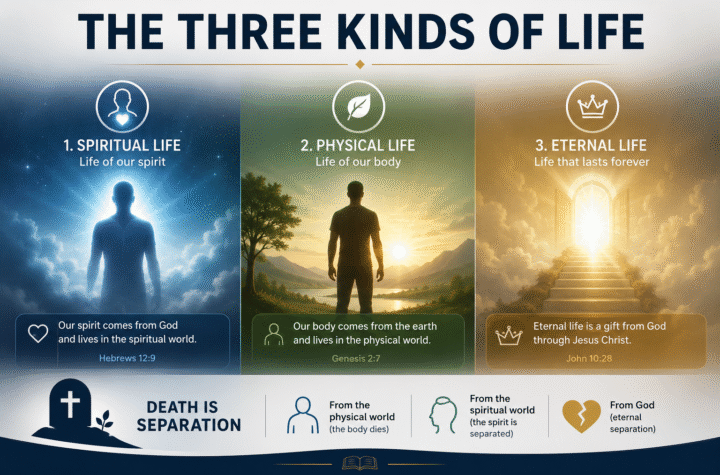
THE THREE KINDS OF LIFE
WHAT IS THE RIGHT RELIGION?
THE BORN-AGAIN EARTH